Aconcagua Polish Glacier Direct with Traverse
Challenge yourself with Aconcagua’s most technical route! (Porter Option Available)
Overview | Full itinerary | Cost Includes
We approach the Polish Glacier via the Ameghino – Upper Guanacos Valley and then traverse the mountain descending via the Normal Route. If you are signing up for the Polish Glacier Route you need to have previous high altitude experience, and be very familiar with the use of ice axe, crampons, and belaying techniques. Over the years, we have specialized in the Polish Glacier Route, and have guided it successfully many times.
Apply NowOverview
The line we choose will depend on conditions. If a lot of penitentes (snow pinnacles formed by direct sunlight) are encountered in the lower section of the glacier, we will start by climbing through the scree and rock on the right hand side.
The steeper Polish Glacier Direct Route has been the choice route in recent years. Although steeper, it is safer and easier due to fewer icy and exposed traverses than on the old Polish Route. On this spectacular, steep snow and ice climb we will use several running belays.
In steeper icy sections we will climb pitches instead of using running belays, belaying and regrouping at every anchor. A long day of climbing will take us to the Summit Ridge at 22,000′ after the last steep pitch; a 55-60 degree narrow gully with the entire Glacier below at our feet. The final ridge is very long and gentle. After summiting, we descend quickly down the Normal Route to Independencia (20,790′) and then down to our High Camp at 19,200′ to rest and spend the night. The next day we descend the Normal Route.
Our Polish Glacier Climb Program also offers the following options:
Helicopter flight from the trailhead to Base Camp
This shaves 2 days off the approach to Base Camp (this is optional and will need to be arranged at the last minute depending on flying conditions. Cost is ~USD $1800 for 3 people) Call or email us for more info on this.
Rental of Altitude Training System
Hypoxic tent, ONLY available in the US & Canada (possibly the UK) for shipping. If you live outside of the US & Canada you can buy the system.
We have done the research and tried it ourselves and the Hypoxic tent system really works! If you are willing to sleep for 4-6 weeks at home in this tent, you will be pre-acclimatized for Aconcagua. You can even watch a movie at home in your Hypoxic chamber, among other things, and regulate your elevation right where you are, increasing it week by week!
Hypoxico offers altitude training equipment starting at $150 a week. They also offer a special Rent-to-Own program. If you decide to keep the unit after your rental period, you can apply up to 8 weeks of your rental cost towards a full buyout! The Rent-to-Own program is a great way to test the equipment and ensure it delivers the performance benefits you are looking for. Please let us know if you are interested and we can arrange the Hypoxico rental for you, or feel free to reach out to Hypoxico directly and let them know you are climbing with Aventuras Patagonicas to receive a 10% discount!
Methods and Explanations of Altitude Training
There are three main training methods used to gain the benefits of Altitude Training:
- Sleeping at altitude
- Exercising at altitude
- Intermittent Hypoxic Training
By engaging in these, you can expect the following physiological reactions to occur:
- Amplified pulmonary oxygen absorption
- Boosted production of Erythropoietin Hormone (EPO) by the kidneys, stimulating generation of Red Blood Cells (RBCs) and enhanced oxygen transportation through the body
- Increased capillarization for greater oxygen delivery to the tissues, muscles and brain
- Enhanced production and rejuvenation of mitochondria (the cell’s hub for aerobic energy production) and mitochondrial enzymes, allowing more efficient use of oxygen for energy production and superior enzymatic anti-oxidative defense.
Visit the Hypoxico website for more info on Hypoxic Training.

Dates of Trips
2025 – 2026
Nov 29th – Dec 17, 2025Dec 9 – 27, 2025
Dec 17, 2025 – Jan 4, 2026
Dec 27, 2025 – Jan 14, 2026
Jan 4 – 22, 2026
Jan 10 – Jan 28, 2026
Jan 17 – Feb 4, 2026
Jan 24 – Feb 11, 2026
Jan 31 – Feb 18, 2026
Feb 7- 25, 2026
Rates
$7,500
Price Increase By August 31st, 2025: $7,800
Booking Deposit: $1,000
Deposit amounts are insurable through Global Rescue and IMG.
Apply NowWaiting List: If an expedition departure you are interested in is full, please contact us to be put on the expedition’s waiting list. In the event of a cancellation, qualified applicants will be able to get that new spot and register.
 Patagonicas Guided Trips on Aconcagua
from Rodrigo Mujica
Patagonicas Guided Trips on Aconcagua
from Rodrigo Mujica
Itinerary
DAY 1 – GROUP MEETS IN MENDOZA Collapse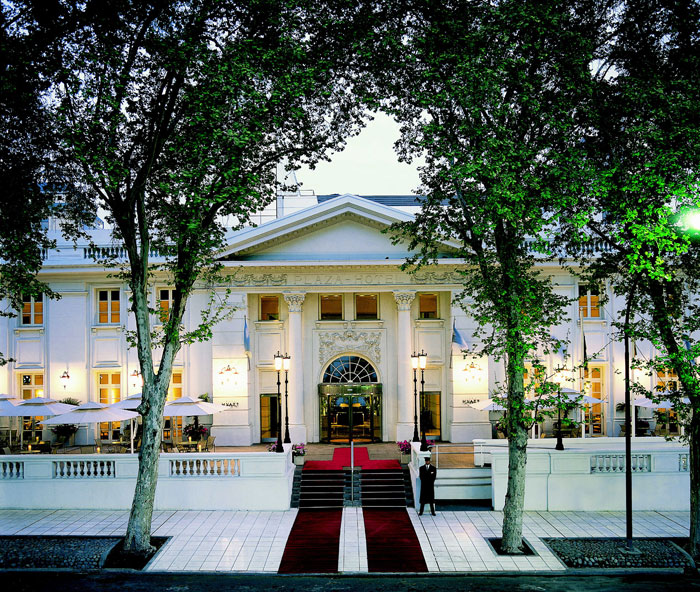
DAY 1
Group meets in Mendoza, Argentina. Equipment check and afternoon briefing at the hotel. For dinner we will have a chance to taste fine Argentinean cuisine and wine
DAY 2-4 – DRIVE FROM MENDOZA & HIKE TO BASE CAMP Expand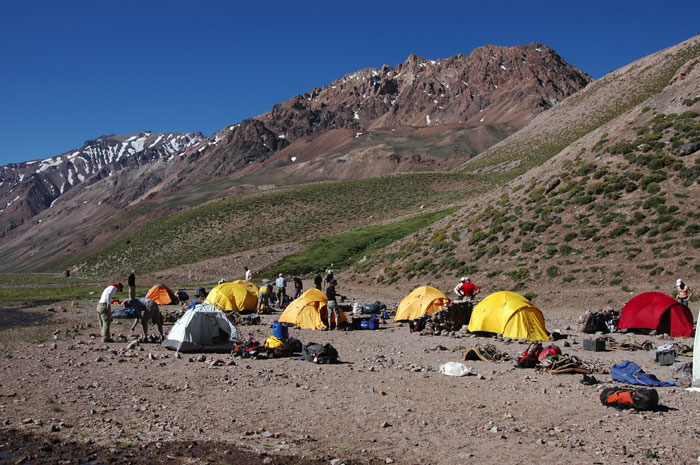
DAY 2
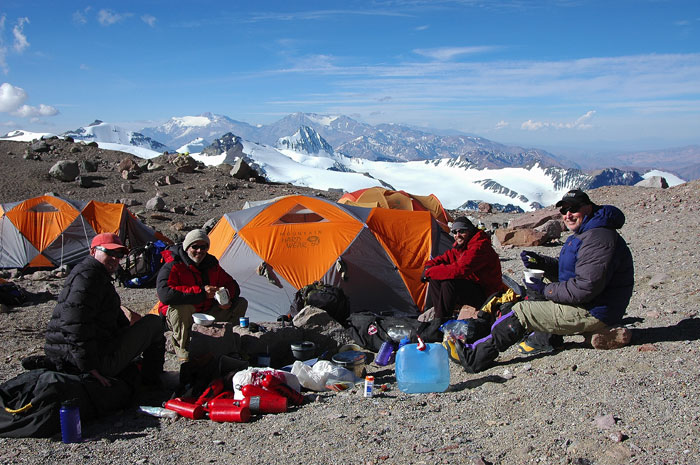
Drive west from Mendoza to the Entrance of the Park at about 8,000′. Our drive winds along the Rio Mendoza deep into the heart of the rugged Andes mountains where we begin our acclimatization process. Approach to Base Camp. Hike up the Vacas and Ameghino Valleys to Base Camp. Mules will carry our gear. Here we begin the route, which was established in 1934 by a Polish Expedition. Even today this eastern approach to the mountain is not as heavily traveled as the Normal Route. After three days of spectacular, colorful, high desert scenery we reach our Base Camp, at 13,800′. The hike to Base Camp is approximately 40 kilometers and gives us the perfect chance to begin our acclimatization.
DAY 5 – REST & ACCLIMATIZATION Expand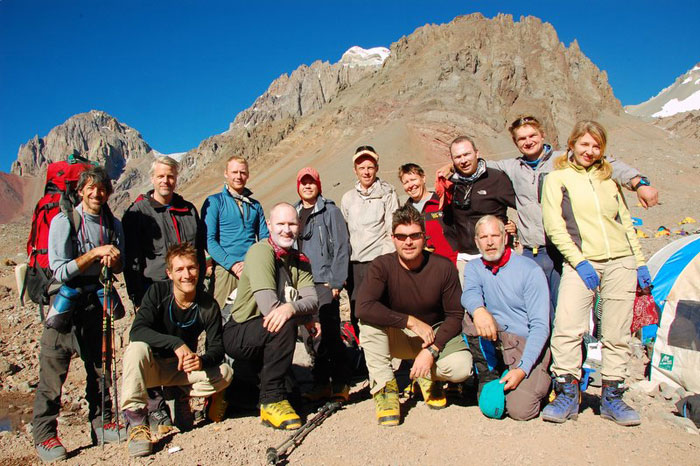
DAY 5
Rest and acclimatization day at Base Camp. Organize for upper mountain. We want everyone to have the best possible chance to make the summit. The most effective way to do this is to take the time to acclimatize to the low oxygen environment. We will incorporate rest days into our schedule and climb in traditional expedition style. We will be carrying loads up to the next camp and returning to sleep below at the previous camp. The next day we will move to the higher camp.This is an excellent method of acclimatization, our main focus throughout your expedition.
DAY 6 – CARRY LOAD TO CAMP I Expand
DAY 6
Carry a load to Camp I at approximately 16,300′. The route goes up the narrow valley between the north side of Cerro Ameghino and Cerro San Francisco. Here we will be able to see Nieve Penitentes, unique snow and ice formations created by the direct sun. Return to Base Camp.
DAY 7 – MOVE TO CAMP I Expand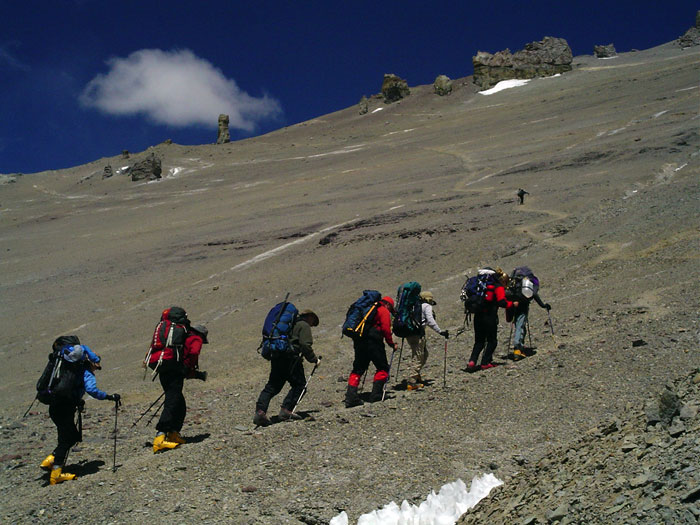
DAY 6
Organize for upper mountain. Possible rest and acclimatization day in Base Camp, if needed. Otherwise, leave Base Camp. Move to Camp I
DAY 8 – CARRY LOAD TO CAMP II Expand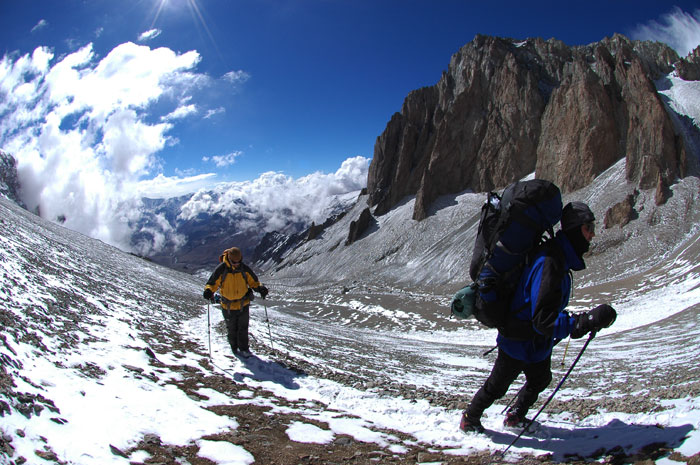
DAY 8
Carry a load to Camp II, at 17,800′. Fantastic view of the Polish Glacier. We ascend scree slopes to a broad ridge crest where we will establish Camp II. Today we reconnect with our UPPER GUANACOS VALLEY ROUTE! After reaching the Ameghino saddle, a gentle easy traverse takes us to the Guanacos. This is an easy day, where we traverse from the saddle to the upper Guanacos, elevation gain is minimum.
DAY 9 – MOVE TO CAMP II Expand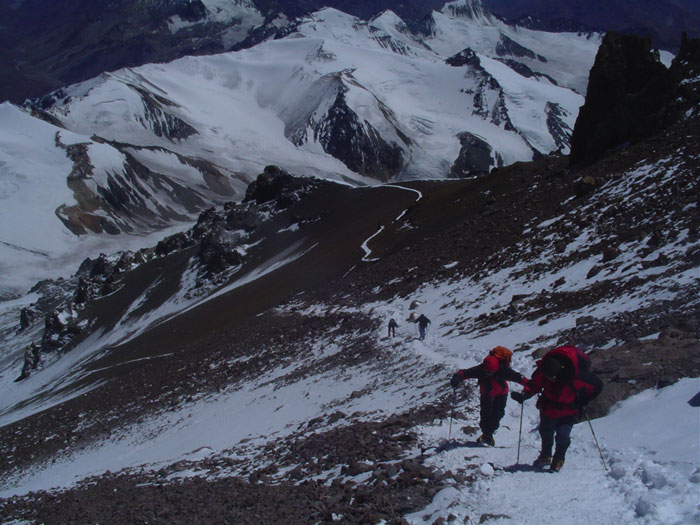
DAY 9
Move to Camp II.
Day 10 – MOVE TO CAMP III Expand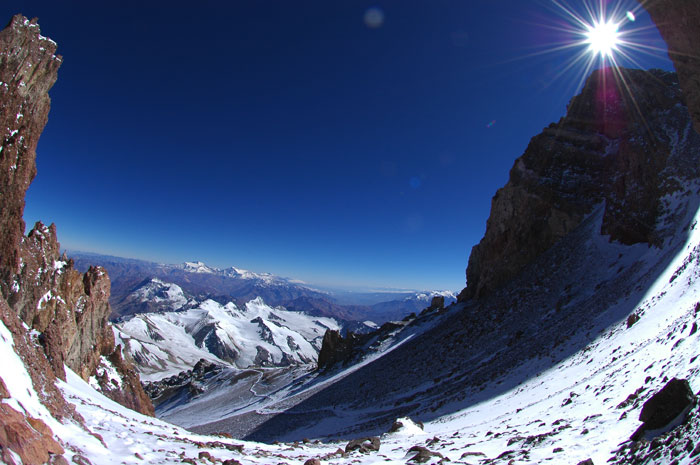
DAY 10
Carry a load/move to Camp III / High Camp below the Polish Glacier, at 19,200′.
Day 11 – CARRY TO HIGH CAMP Expand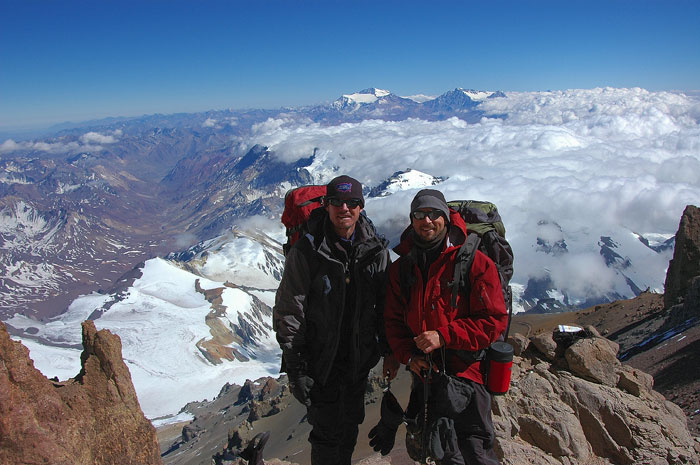
DAY 11
Carry to High Camp from where we will tackle the summit after we move there, depending on how group is doing.
Day 12 – MOVE TO HIGH CAMP Expand
DAY 12
Move to Camp III / High Camp from where we will tackle the summit the next day, depending on how group is doing.
Day 13-16 – SUMMIT! Expand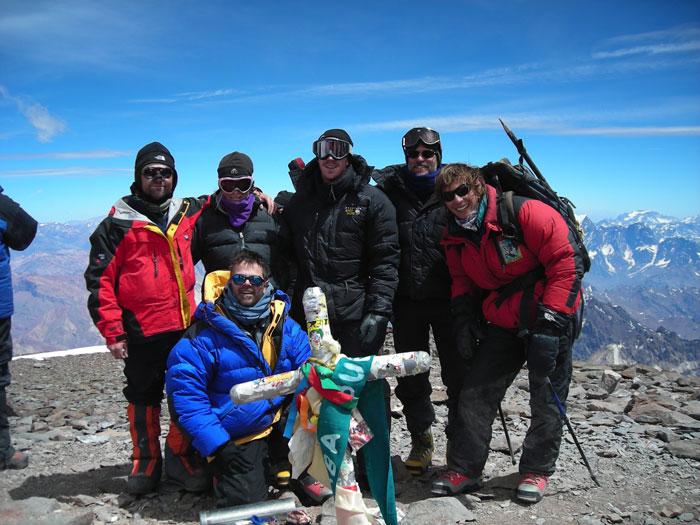
Day 13-16
Summit! Weather permitting. We allow several days for Summit Day in case of poor weather. This is by far the longest and hardest day of the Expedition. Spectacular steep snow and ice climbing will take us to the summit.
Day 17 – DESCEND NORMAL ROUTE Expand
Day 17
Descend the Normal Route to Plaza de Mulas Base Camp. This will be quite exciting since we descend a different side of the mountain.
Day 18 – HIKE OUT HORCONES VALLEY Expand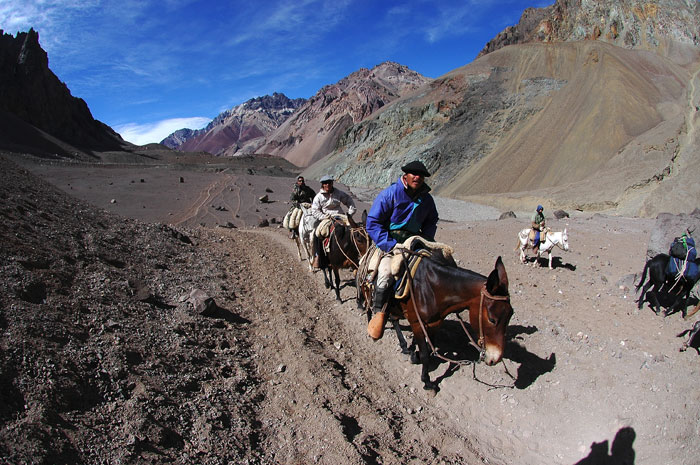
Day 18
Hike out the Horcones Valley with its impressive views of Aconcagua’s South Face. Mules carry our gear. We arrive in the afternoon to Penitentes where we may take a quick shower and head on to Mendoza to the comfort of the Mendoza Park Hyatt. If extra weather and acclimatization days are not used on our expedition, you and your team may arrive a day or two earlier to Mendoza. Evening banquet with your team.
DAY 19 – LEISURE DAY IN MENDOZA Expand
DAY 19
Leisure day in Mendoza, possibly fly home this afternoon or continue traveling in South America
Cost Includes
- Professional Mountain Guides
- 2 nights hotel accommodation in Mendoza at the Mendoza Park Hyatt Hotel with breakfast buffet (1 night at the beginning of the expedition and 1 night at the end of the expedition)
- Mules
- All expedition food (4 full days at base camp included – normally more than enough), any extra days at base camp will have a fee per person
- All land transportation (except for airport drop off, we leave this as leisure since many people travel afterwards etc, this can be arrange directly at reception at the Hyatt as well)
- All community gear such as: tents, stoves, state of the art Base Camp, cooking gear, medical kits, satellite phones, radios, gamow bag, pulse-oximeters, etc.
You are responsible for
- Round-trip flights to and from Mendoza, Argentina
- Aconcagua climbing permit fee ($950 to $1,050 depending on season) We will get permits for you before your arrival. South Americans pay about half of this amount and Argentinean Citizens about 1/4 of that amount.
- Meals in Mendoza
- Personal equipment
- Flight out of Base Camp to trailhead, cost is about USD $2,000 for 3 people ($670 each)
- Passport
- Personal items and services (laundry, snacks, drinks, tips, etc.)
- Expenses incurred in the case of a rescue or early departure from the expedition
- SAT phone charges
- Porter fees (See below)
Hiring porters (Available on All Routes)
Porter fees are not included in any of our trips costs, but porters are available to hire on EVERY route that we offer.
If you plan to hire porters, please let us know and we will be more than happy to arrange it for you. We don’t take a fee for arranging porters, you just pay the porters directly.
Porters cost from $185 to $400 per load carry depending on the altitude they carry to. The cost per load increases as you climb the mountain, so a carrying a load from Camp 2 to Camp 3 will be more expensive than carrying the same load from Base Camp to Camp 1.
You will need a maximum of 5 to 6 load carries from Base Camp to High Camp and back down to Base Camp again (~$1,500 USD), if you choose to have a porter for each carry, and move, and for the descent of the mountain.
Porters are available at Base Camps on both sides of Aconcagua: Plaza Argentina for Ameghino Valley/Polish Glacier routes, and Plaza de Mulas for the Normal route which is also used for our 12 Day Climbs. The final number of estimated load carries can be decided when you get to Base Camp but it’s best to plan ahead and let us know if you do plan on hiring porters so we can ensure a smooth and easy experience for you!